Hit Enter to Search or X to close
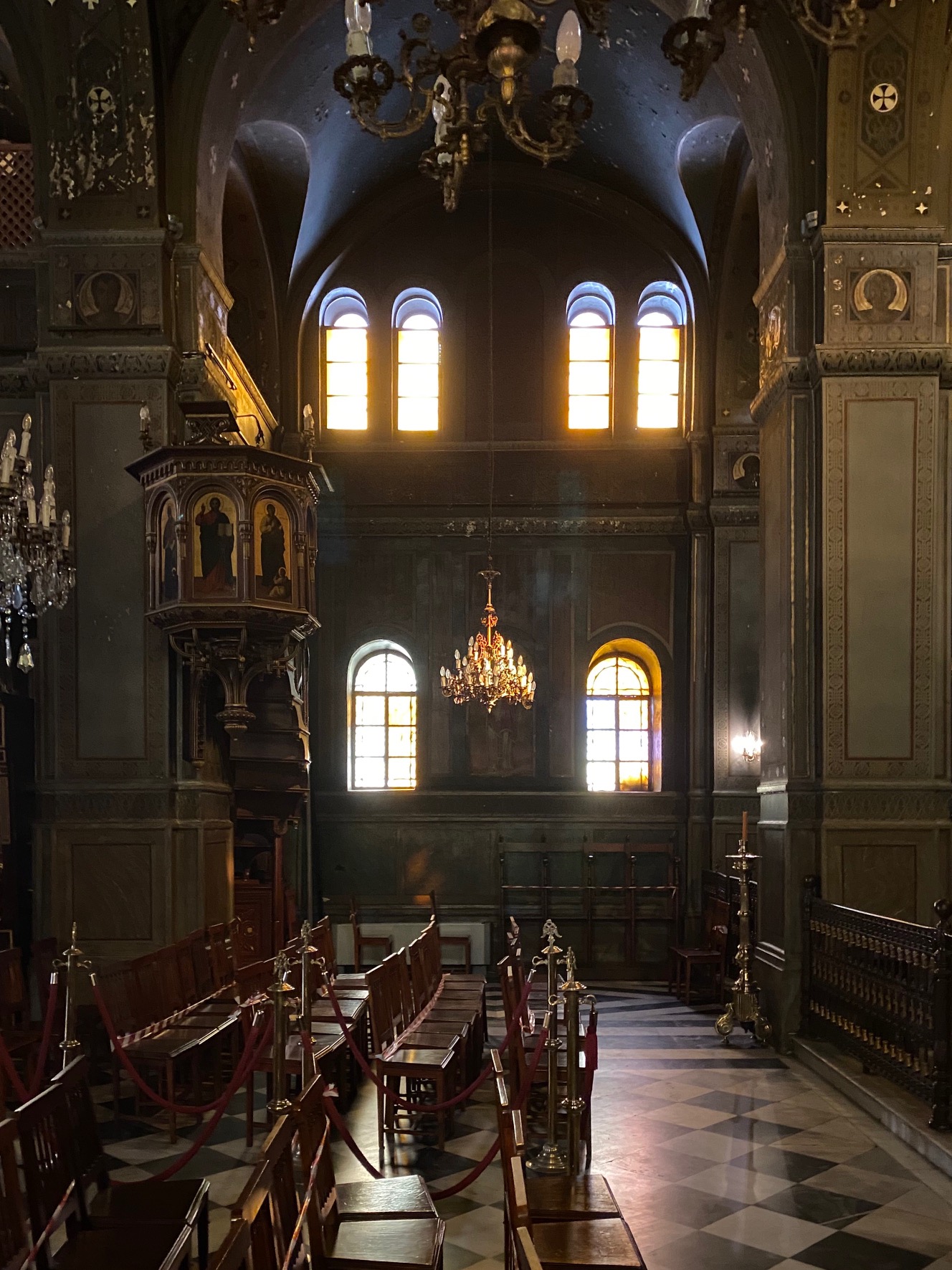
The Holy Church of St. George Karytsi
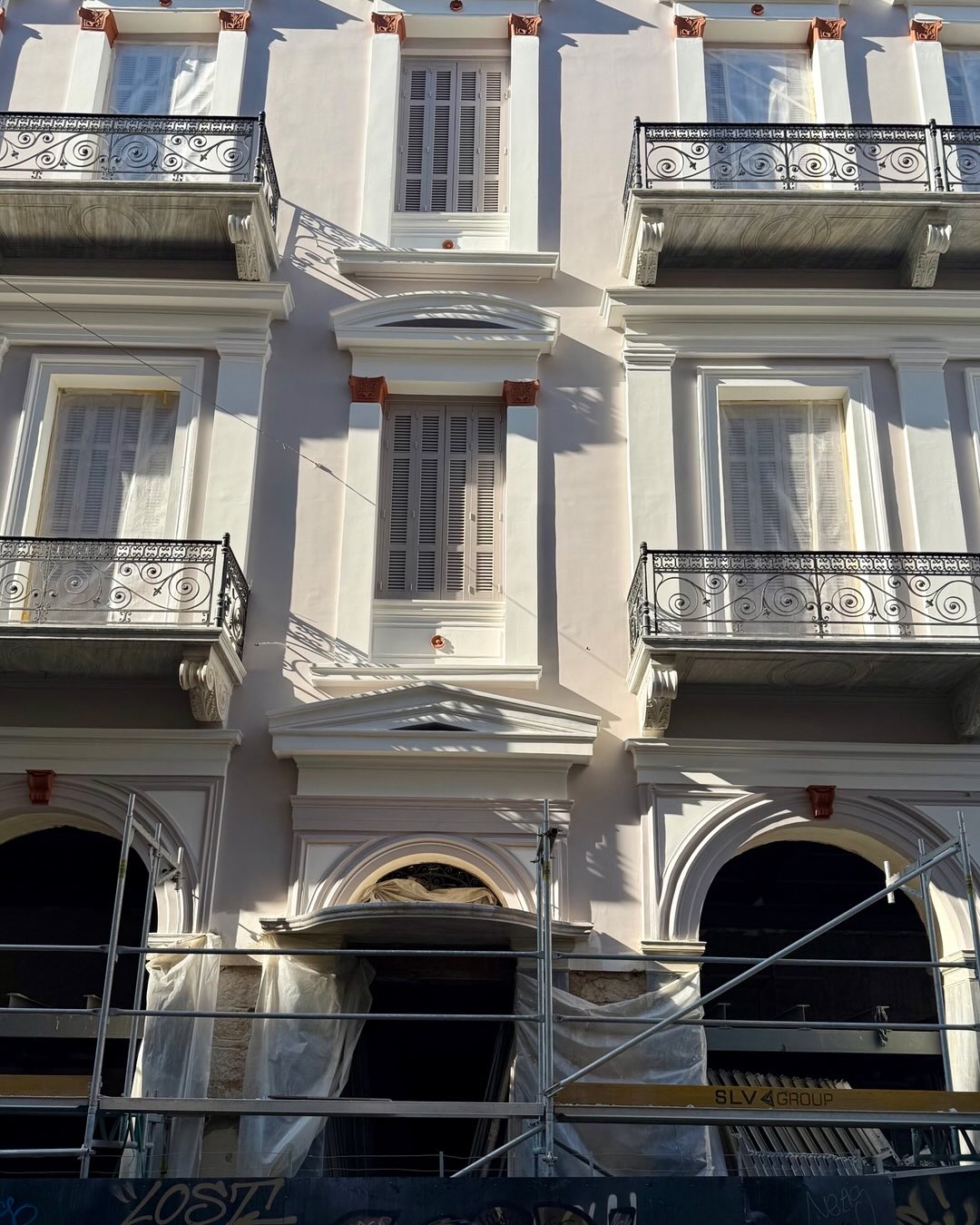
Visiting the 11c. medieval church of Agios Georgios (St. George) Karykis or Karytsis, has always felt like making a pilgirimage to Constantinople. It belonged to the well-known Athenian family of Karytsis or Karykis which gives the beautiful smalll square its name. During the Greek Revolution in 1821 it suffered significant damages and by the end of the Revolution it was almost in ruins. However, it continued to be used. It was in this church that the Athenians in this church chose the delegation that was to greet the arrival of King Othon in Nafplion. The bad condition of the church led the parishioners to commission the architect Lysandros Kaftantzoglou, who in the middle of the decade of 1840 had undertaken the reconstruction of the church of Agia Eirini at Aiolou street. The church was reconstructed in the period 1845-1849, and as one can see lightly less Byzantine in style.
The church follows the style of three-aisle basilica with a dome, but an interesting variation is the central gate of grey marble, which is crowned by the white steeple. For the construction of the church, they used materials from the cemetery that was in the area during the antiquity and the Byzantine Period. In 1849 the dome partly collapsed and then they added supports (buttresses) on the side walls. In 1895 the magnificent screen was made, and then the archieratic throne in 1901, works of the well-known wood-carver Ioannis Magiasis. Important painters of that time, such as Polychronis Lembesis, Dimos Georgantas and Dimitrios Pelekasis have contributed in the wall paintings of the church. A noteworthy detail is the oil painting of the parable of the blind, on the northern wall near the sanctuary, the work of the renowned archaeologist Alexander Philadelpheus, who was curator of antiquities and director of important museums.
The church of Agios Georgios Karytsis.
Saint Georgios, the holy, glorious and right-victorious Great-martyr and Trophy-bearer, was a Christian Roman soldier killed under emperor Diocletian at the beginning of the fourth century. The Orthodox Church commemorates George on April 23. According to tradition, George was born to a Christian family during the late 3rd c. His father was from Cappadocia and served as an officer of the army. while his mother was from Palestine. She returned to her native city as a widow along with her young son after the martyrdom of George's father, where she provided him with a respectable education and raised him in piety. Georgios followed his father's example in joining the army soon after his coming of age. He proved to be a charismatic soldier and consequently rose quickly through the military ranks of the time. By his late twenties he had gained the rank of tribunus (tribune) and later comes (count). By that time George had been stationed in Nicomedia as a member of the personal guard attached to the emperor Diocletian (reign 284–305). It is believed that George was ordered to take part in the persecution but instead confessed to being a Christian himself and criticized the imperial decision. An enraged Diocletian proceeded in ordering the torture of this apparent traitor and his execution. Following torture, George was executed by decapitation in front of Nicomedia's defensive wall on April 23, 303. George's body was returned to Lydda for burial, where Christians soon came to honor George as a martyr.
.svg)





Get weekly updates
*We’ll never share your details.

Join Our Newsletter
Get a weekly selection of curated articles from our editorial team.